


Article
Why I Think Long-Term About Work, Money and Life

A few days ago, I attended a university reunion, and near the end of the evening, when only a few of us remained, I asked my former classmates about their goals for 2025. One of them smiled at the question, turned it back to me, and the conversation quickly moved on. This small moment reminded me how natural it feels for me to think about the future and set goals, compared to the way others might view it.
For as long as I can remember, I have always thought in the long term. It is not a deliberate choice or a strategy I picked up along the way. It is just how my mind works. Whether it is a decision at work, a financial plan, or even personal goals, I naturally gravitate toward thinking about the bigger picture and what comes next. This forward-leaning mindset is one of the traits I have come to recognise as part of my INTJ personality. It is not something I chose, it is just how my attention tends to settle.
Long-Term Thinking in My Work
In my professional life, long-term thinking is not about perfectly predicting the future. It is about identifying the things that truly matter, the projects and goals where I want to focus my energy, those that carry lasting value.
This is why I deeply enjoy building teams or rethinking how we work with data. These kinds of efforts demand a clear vision for the future and a dedication to creating changes that have a lasting and tangible impact.
Long-Term Thinking in Finances
Long-term thinking in finances is tied to how I have approached saving and spending my whole life. Being mindful about resources and consistently setting money aside reflects my commitment to building a stable future. For me, it is about creating habits that align with patience and purpose, rather than chasing short-term rewards.
Continue reading for free
Enter your email to keep reading for free. This also subscribes you to my monthly newsletter. No spam, unsubscribe anytime.
Summary
If you have any thoughts, questions, or feedback, feel free to drop me a message at mail@richardgolian.com.
 LinkedIn


More articles
The development of artificial intelligence changes how we look at which paths in life make sense. Which studies and which profession to choose.
It was Thursday, 31 March 2022, when I handed over the last of my responsibilities to my colleagues, closed my laptop and went to the library. I left my job for several months and immersed myself in philosophy. And I am immensely grateful for it. Today I am, like most people, on a merry-go-round, and it is hard for me to stop and think about the fundamental questions of my own life.
It was September 2023. My life, my work, everything was completely different from now. It was simpler. I owned almost nothing. I needed to film an advert, I went up to a floor inside the company where the product I needed for that advert was, and there I noticed her for the first time. She laughs at me when I describe it like this, but at that moment the universe told me, that is her.
How and why I am gradually leaving social media and the big platforms. When I read that Meta is testing a new way to charge for organic posts that link outside its platform, it confirms how right I was to become steadily less dependent on the big platforms and on social media. It does not mean I have left them completely. It means that whether or not I stay in touch with my readers depends on them less and less, and today almost not at all.
One of my family members described a firm that has its data in several different tools, and its employees still join it by hand, in spreadsheets. That is the ordinary state of firms. When somebody tells such people not to do it by hand and to use AI, they will not understand. Most firms do not even have the basic connectors between the tools they use. These firms need help with AI transformation.
The same task, two models. Fable 5 against Opus 4.8. On paper Fable is the better model, with a larger context and stronger specs. And still it lost. Opus handled the task with a single round of checking for 721,000 tokens, while Fable needed nine rounds and burnt through 2.78 million tokens. The difference was not in the model, but in how I set the task. And I know it, because I measured it.
A few weeks ago I installed a small local AI model on my laptop that watches a live camera feed. I turned the webcam on in the dark, and in near total darkness it recognised me and the objects in the room. That such things exist, I have known for a long time. What opened my eyes was the accessibility. I installed it in one prompt, free, and it runs entirely on my machine, sending data nowhere.
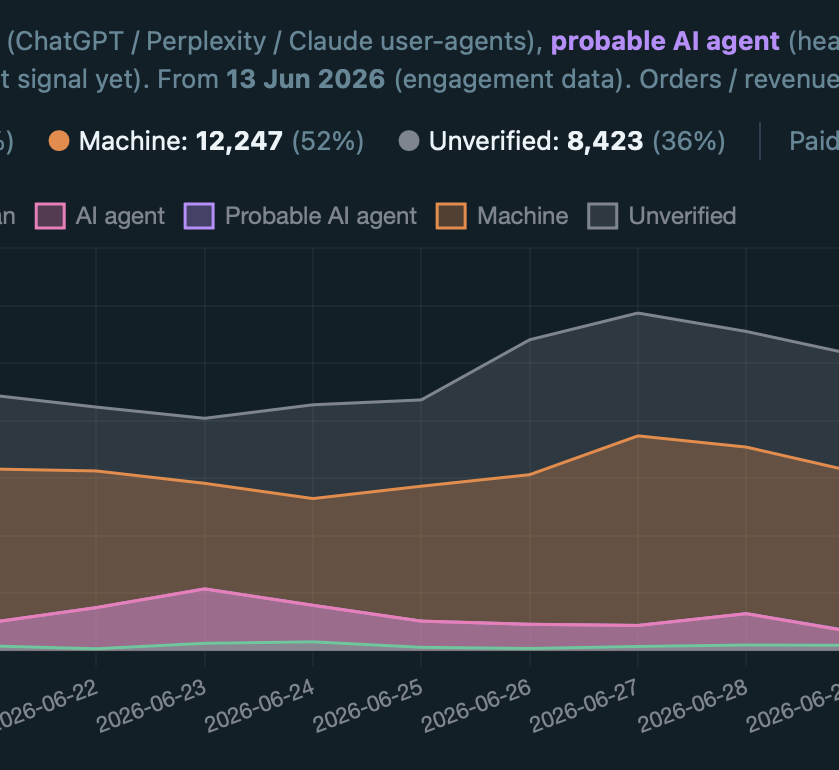
I once wrote about building my own privacy-friendly analytics tool. It had bot detection from the first version, yet it was not enough. Direct visits took a strangely high share of my traffic. When someone claims that 20% of their visits are bots and 80% are humans, I used to think the same. Today I would say the opposite ratio is closer to the truth. This is how I got there.
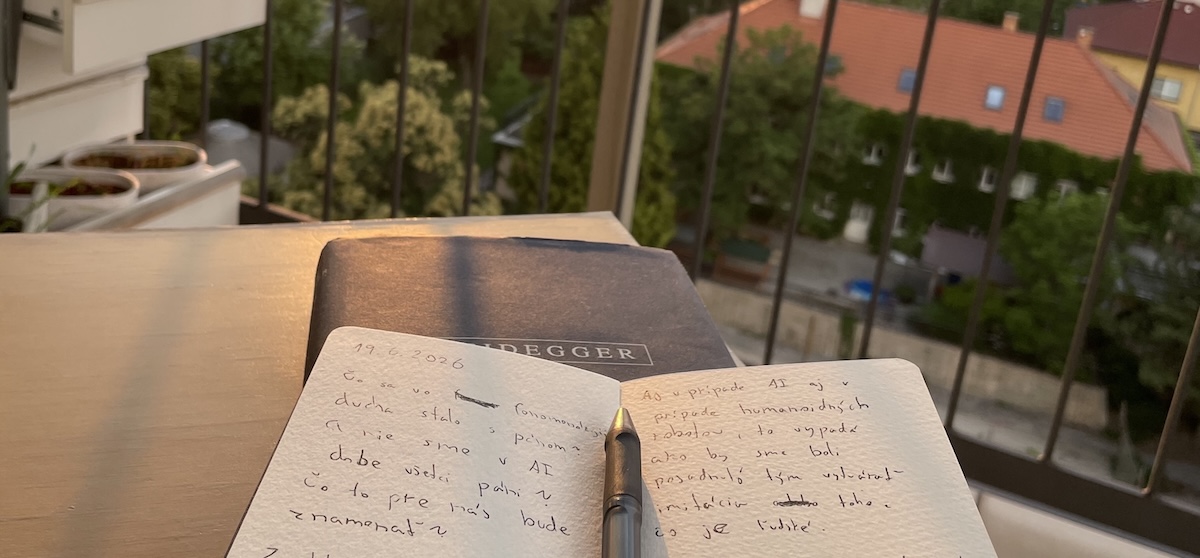
I have Heidegger and my notebook beside me. I am asking where all of this is heading, where artificial intelligence is taking us.
Seventy per cent. That is where the first AI output begins, even when you give it the full company context and the best examples from the past. We are talking about the kind of output that cannot be defined programmatically. It is more complex. Often it is creative work. On one repeated type of output I reached eighty per cent within a week. Every further percentage point is harder than the one before.
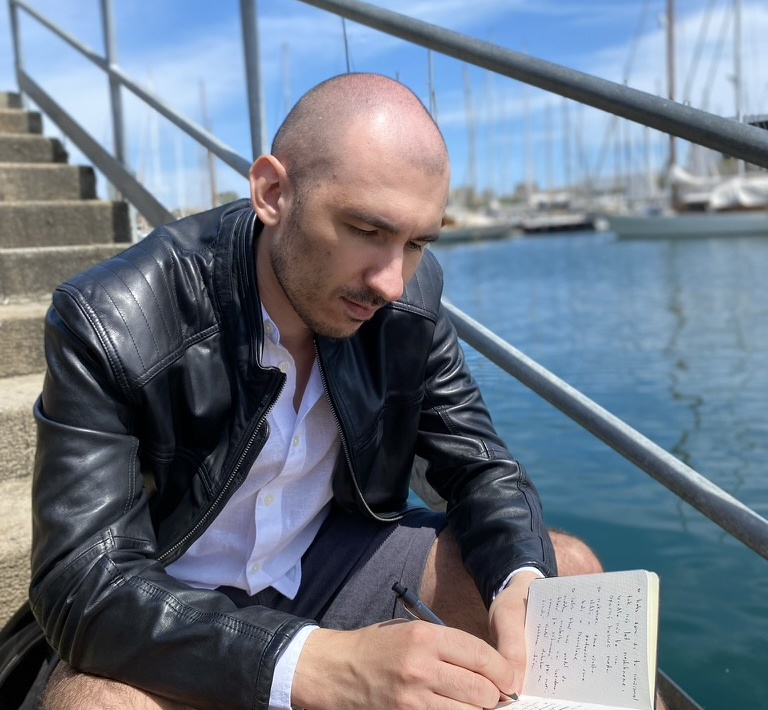
Four days in Catalonia. No computer, no AI, almost no social media. I bought this notebook so that I could write down what I would think about, and what I would come across and learn on the trip.