

Article
Will AI take my job?

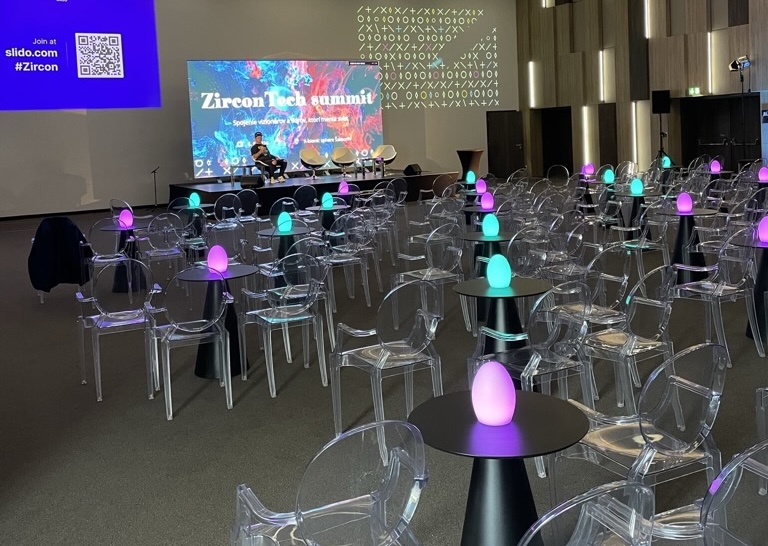
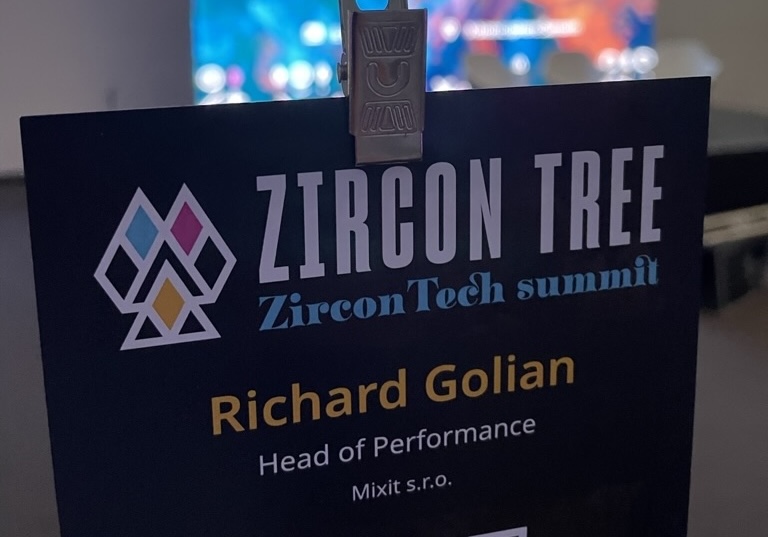
On the sixth of June 2024, I was at the afterparty of the ZirconTech Summit, a gathering of Slovak e-commerce leaders, just outside Bratislava. I asked one of the attendees what he thought would be the biggest change in e-commerce over the next decade.
That person was Martin Volek, one of the first Google-certified trainers in Slovakia and a regular guest on Slovak business programmes.
He said: "Your profession will cease to exist. Don't let it weigh on you. But it will happen."
I went quiet. I do not remember what I said next. The conversation carried on. But I kept that sentence.
Martin saw a few things more clearly that evening than I did.
Two fears about AI: losing your job, or falling behind
What I see today is fear.
At Mixit, where I work as Head of Performance, and at events like that summit, I mostly run into two kinds of fear. Usually they come packaged with jokes. The kind of joking where you can hear the fear underneath.
The first is the fear of losing your job. People hear that AI will replace knowledge work, the things we do on a computer.
The second fear is felt, paradoxically, by those who are ahead with AI. They fear falling behind. Something important is slipping past them. A new model, a method someone came up with last week. They spend evenings and weekends trying to keep pace.
You cannot keep up with AI, and you do not need to
The fear of falling behind on AI has one simple source. The amount of AI content being published is more than anyone can read. A better summariser will not solve it. Even if some agent scraped and summarised everything, that summary still would not fit inside a normal life with work, sleep, and the time needed to actually apply anything.
Hours spent watching AI videos do not make you better at your job. What counts is whether you watch the thing that moves your work forward, and whether you apply it.
My own consumption of AI news is now nearly zero. Thirty minutes a day at most. What I have instead is access to people in Slovakia and Czechia whose businesses are built on applying AI and who know what actually works. I will learn more from five sentences with one of them than from ten YouTube videos.
I have stopped watching most AI influencers. They talk about short-term viral trends, not about how to actually apply things that make sense.
What changed over twenty-two months
My job title has not changed since the ZirconTech summit. But what I do during the day is ninety percent different.
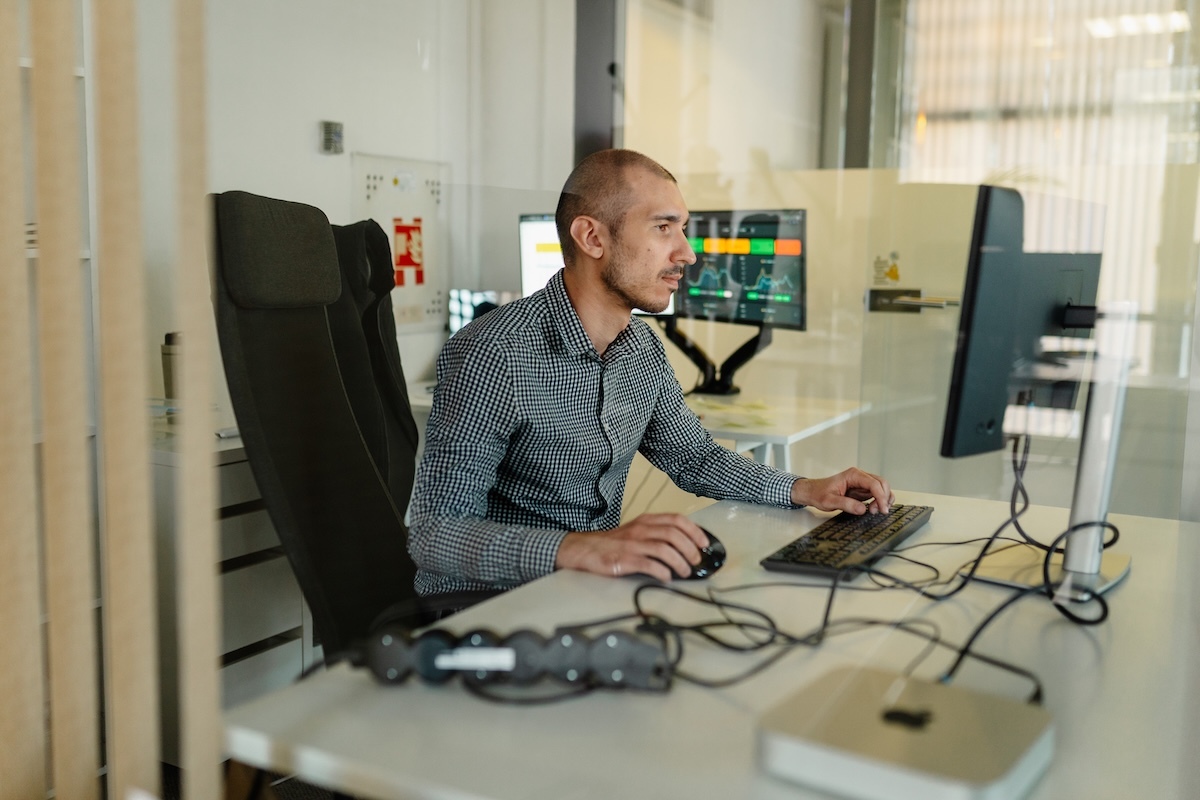
In June 2024 I spent hours every week on manual data work. In April 2026 I do none of that. What I do is give feedback to agents when they make a bad call. My work has shifted up one level. I no longer do spreadsheet work by hand. I work with the reasoning of the system that works with the data.
It changed gradually and fairly quickly at the same time.
What delegating judgement to AI looks like
I have delegated more of my thinking than I ever thought possible. This is what Martin saw more clearly than I did. For example, when we are considering deploying a new intelligent feature on our company website, the model does the research, weighs the options (tools, costs, time, trade-offs), and puts them in a table, from which it picks the best option. I read the table and check whether the logic holds. The final call is still mine or someone from leadership. But the weighing and comparing is no longer mine.
In certain cases it has gone further.
Join the Library
Full access to my findings, personal stories, and what I learn from the people I meet.
Join the Library · €29.99 per year How a small business, creator or politician can be… What should I study in the age of AI?… I Left My Job for Several Months to Read… How I Fell in Love With Her, at First… How do you stop depending on social media? Can… How to Start With AI in a Company: Automating…Get the full article by email and feel free to reply if you want to discuss it further.
Summary
Common questions on this article's topic
Is my job safe from AI?
What jobs can AI not replace?
Will AI replace marketers?
How do I keep up with AI?
How do I stay relevant in the age of AI?
Is AI going to take my job?
If you have any thoughts, questions, or feedback, feel free to drop me a message at mail@richardgolian.com.
 LinkedIn


Related articles
Are you a content creator playing by the rules of YouTube, Instagram or Google? Are you a small business owner whose business model depends on how often Amazon recommends you, how expensive Facebook ad impressions will be or how expensive Google Ads clicks will be? If all or most of your contact with your audience or customers depends on a big platform showing you to them, you are not in a strong position.
When you hear that artificial intelligence still does not deliver good enough output, that it is unusable for certain tasks, it is worth realising that this may no longer be true today. And even if it were, the most intelligent minds on this planet are working on making AI more useful. Most work activities will be automated. To understand where this is heading, some questions have to be asked.
One of my family members described a firm that has its data in several different tools, and its employees still join it by hand, in spreadsheets. That is the ordinary state of firms. When somebody tells such people not to do it by hand and to use AI, they will not understand. Most firms do not even have the basic connectors between the tools they use. These firms need help with AI transformation.
More articles
The development of artificial intelligence changes how we look at which paths in life make sense. Which studies and which profession to choose.
It was Thursday, 31 March 2022, when I handed over the last of my responsibilities to my colleagues, closed my laptop and went to the library. I left my job for several months and immersed myself in philosophy. And I am immensely grateful for it. Today I am, like most people, on a merry-go-round, and it is hard for me to stop and think about the fundamental questions of my own life.
It was September 2023. My life, my work, everything was completely different from now. It was simpler. I owned almost nothing. I needed to film an advert, I went up to a floor inside the company where the product I needed for that advert was, and there I noticed her for the first time. She laughs at me when I describe it like this, but at that moment the universe told me, that is her.
How and why I am gradually leaving social media and the big platforms. When I read that Meta is testing a new way to charge for organic posts that link outside its platform, it confirms how right I was to become steadily less dependent on the big platforms and on social media. It does not mean I have left them completely. It means that whether or not I stay in touch with my readers depends on them less and less, and today almost not at all.
The same task, two models. Fable 5 against Opus 4.8. On paper Fable is the better model, with a larger context and stronger specs. And still it lost. Opus handled the task with a single round of checking for 721,000 tokens, while Fable needed nine rounds and burnt through 2.78 million tokens. The difference was not in the model, but in how I set the task. And I know it, because I measured it.
A few weeks ago I installed a small local AI model on my laptop that watches a live camera feed. I turned the webcam on in the dark, and in near total darkness it recognised me and the objects in the room. That such things exist, I have known for a long time. What opened my eyes was the accessibility. I installed it in one prompt, free, and it runs entirely on my machine, sending data nowhere.
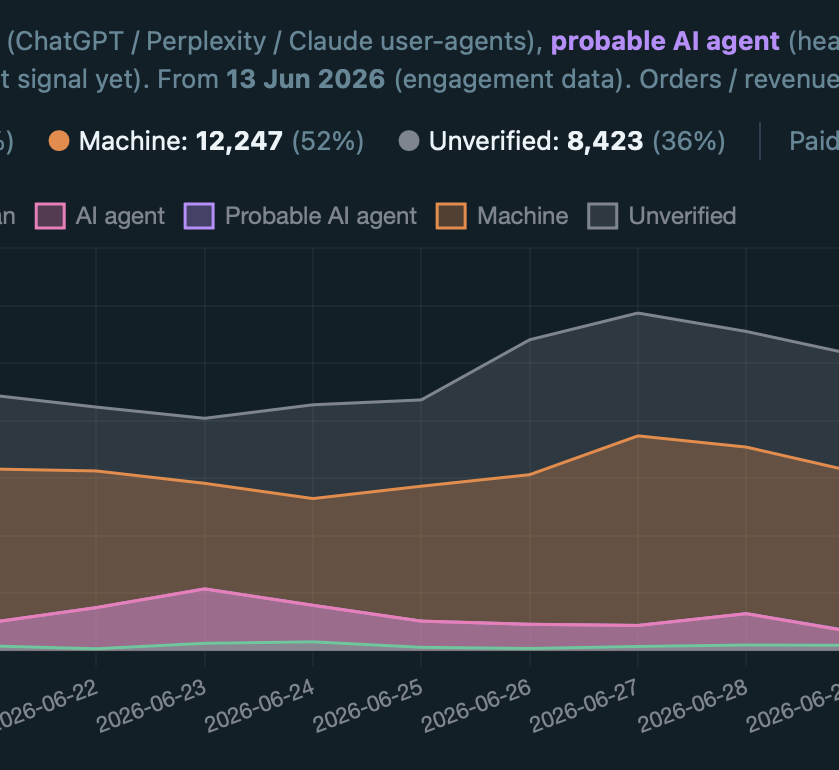
I once wrote about building my own privacy-friendly analytics tool. It had bot detection from the first version, yet it was not enough. Direct visits took a strangely high share of my traffic. When someone claims that 20% of their visits are bots and 80% are humans, I used to think the same. Today I would say the opposite ratio is closer to the truth. This is how I got there.
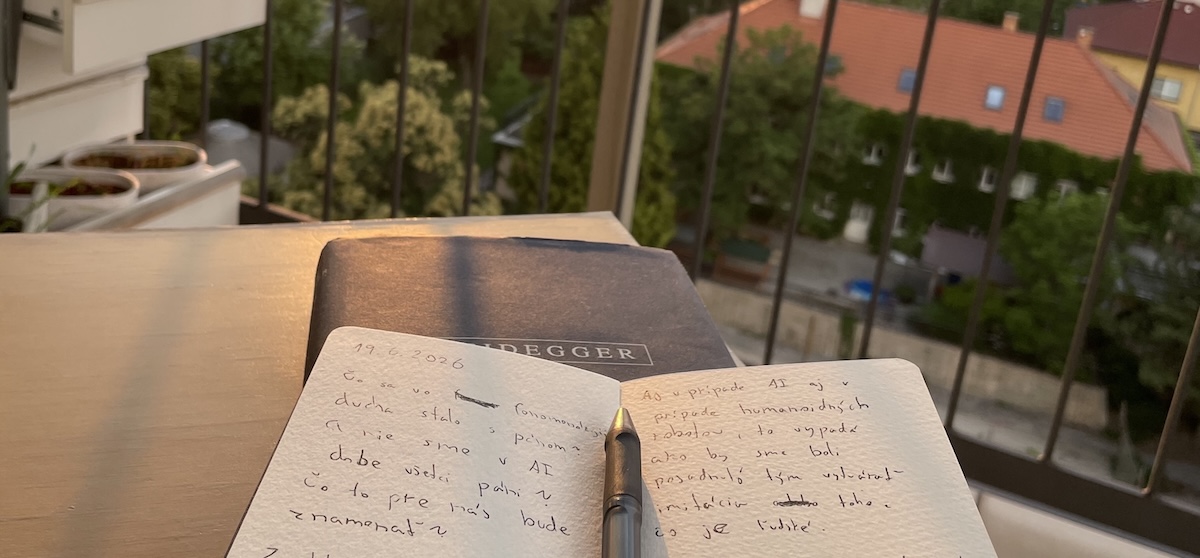
I have Heidegger and my notebook beside me. I am asking where all of this is heading, where artificial intelligence is taking us.
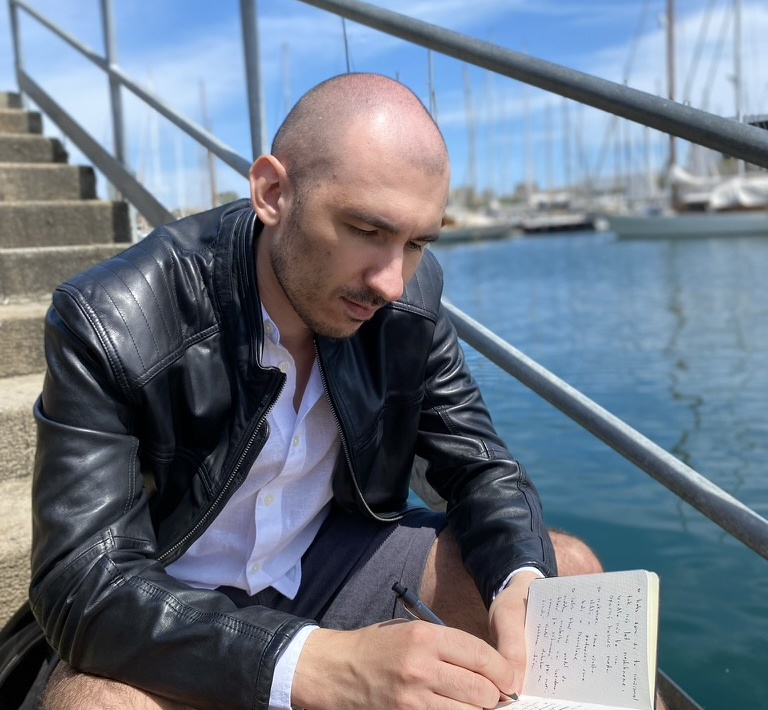
Four days in Catalonia. No computer, no AI, almost no social media. I bought this notebook so that I could write down what I would think about, and what I would come across and learn on the trip.