



Article
Applied Phenomenology: Marketing, Investing, AI

Phenomenology, for me, is not a theory, it is primarily a method, and something that permanently changed how I perceive the world and myself, how I think and how I work.
What Is Phenomenology?
Phenomenology is a method of inquiry concerned above all with how things show themselves to us. It studies experience itself, how we perceive and understand the world before we begin to form theories about it.
It is also described as one of the philosophical traditions. Most philosophical traditions, however, start with a theory and we then look at the world through it. Phenomenology does the opposite. It starts with how things actually appear to us, and asks what that tells us about the world and about ourselves.
The tradition was founded by Edmund Husserl in the early 20th century. He examined how we perceive, how we understand, and how meaning forms before any theory or assumption enters the picture.
That sounds abstract.
In practice, it means examining what most people take for granted: perception, understanding, language, emotion, meaning. Not as psychological categories, but as structures that shape how any situation appears to someone before they even begin to analyse it.
The key figures in phenomenology are Husserl, Martin Heidegger and Maurice Merleau-Ponty. Heidegger examined human existence itself. Merleau-Ponty focused on the body and perception.
What connects them is one belief: the way things appear to us is not obvious. It needs to be examined.
Phenomenology Is Not an Easy Discipline to Understand
Phenomenology demands patience, determination and a great deal of curiosity. The texts are difficult. Understanding a single passage from Heidegger can take weeks. Many philosophy students encounter phenomenology once and find it so hard that they would rather devote themselves to another discipline. The ones who stay are often the ones who find the difficulty itself interesting, not frustrating.
I was drawn to it precisely because it was the hardest thing I had encountered at university.
Phenomenology in Everyday Life
Today I do not work in academia. I work in the commercial sphere, but I still draw heavily on what I gained from studying phenomenology. Above all in the way I described above, that I treat phenomenology as a method. When I say that I do applied phenomenology, it means that I apply phenomenology as a method.
My work involves applying phenomenology in marketing, managerial decision-making, and investing. I do it in those situations where traditional analytical methods fall short.
In marketing, phenomenology does something data alone cannot. It lets you see how understandable a campaign is from so many angles that no quantitative research will show you.
In investing, it helps me observe mood and narrative, not whether there is optimism or pessimism in the market, but again, it shows the context in which that optimism and that pessimism are born, through a completely new lens.
And in the age of artificial intelligence, phenomenology is perhaps most underappreciated. It has produced research on perception, understanding, language and meaning, topics foundational to what language models generate.

University and the Path to Phenomenology
What phenomenology did almost immediately was turn my attention to things I had never examined seriously before: perception, understanding, language, anxiety. Until then I had seen no need to understand them more deeply. Today I see that understanding as the basis for understanding everything else.
Join the Library
Full access to my findings, personal stories, and what I learn from the people I meet.
Join the Library · €29.99 per year How a small business, creator or politician can be… What should I study in the age of AI?… I Left My Job for Several Months to Read… How I Fell in Love With Her, at First… How do you stop depending on social media? Can… How to Start With AI in a Company: Automating…Get the full article by email and feel free to reply if you want to discuss it further.
Summary
Common questions on this article's topic
What is phenomenology?
What does phenomenology mean?
What is an example of phenomenology in everyday life?
Can phenomenology be applied in marketing or business?
Why is phenomenology considered difficult to study?
How does phenomenology differ from psychology or data analysis?
How is phenomenology relevant to artificial intelligence?
Who are the key figures in phenomenology?
If you have any thoughts, questions, or feedback, feel free to drop me a message at mail@richardgolian.com.
 LinkedIn


More articles
Are you a content creator playing by the rules of YouTube, Instagram or Google? Are you a small business owner whose business model depends on how often Amazon recommends you, how expensive Facebook ad impressions will be or how expensive Google Ads clicks will be? If all or most of your contact with your audience or customers depends on a big platform showing you to them, you are not in a strong position.
The development of artificial intelligence changes how we look at which paths in life make sense. Which studies and which profession to choose.
It was Thursday, 31 March 2022, when I handed over the last of my responsibilities to my colleagues, closed my laptop and went to the library. I left my job for several months and immersed myself in philosophy. And I am immensely grateful for it. Today I am, like most people, on a merry-go-round, and it is hard for me to stop and think about the fundamental questions of my own life.
It was September 2023. My life, my work, everything was completely different from now. It was simpler. I owned almost nothing. I needed to film an advert, I went up to a floor inside the company where the product I needed for that advert was, and there I noticed her for the first time. She laughs at me when I describe it like this, but at that moment the universe told me, that is her.
How and why I am gradually leaving social media and the big platforms. When I read that Meta is testing a new way to charge for organic posts that link outside its platform, it confirms how right I was to become steadily less dependent on the big platforms and on social media. It does not mean I have left them completely. It means that whether or not I stay in touch with my readers depends on them less and less, and today almost not at all.
One of my family members described a firm that has its data in several different tools, and its employees still join it by hand, in spreadsheets. That is the ordinary state of firms. When somebody tells such people not to do it by hand and to use AI, they will not understand. Most firms do not even have the basic connectors between the tools they use. These firms need help with AI transformation.
The same task, two models. Fable 5 against Opus 4.8. On paper Fable is the better model, with a larger context and stronger specs. And still it lost. Opus handled the task with a single round of checking for 721,000 tokens, while Fable needed nine rounds and burnt through 2.78 million tokens. The difference was not in the model, but in how I set the task. And I know it, because I measured it.
A few weeks ago I installed a small local AI model on my laptop that watches a live camera feed. I turned the webcam on in the dark, and in near total darkness it recognised me and the objects in the room. That such things exist, I have known for a long time. What opened my eyes was the accessibility. I installed it in one prompt, free, and it runs entirely on my machine, sending data nowhere.
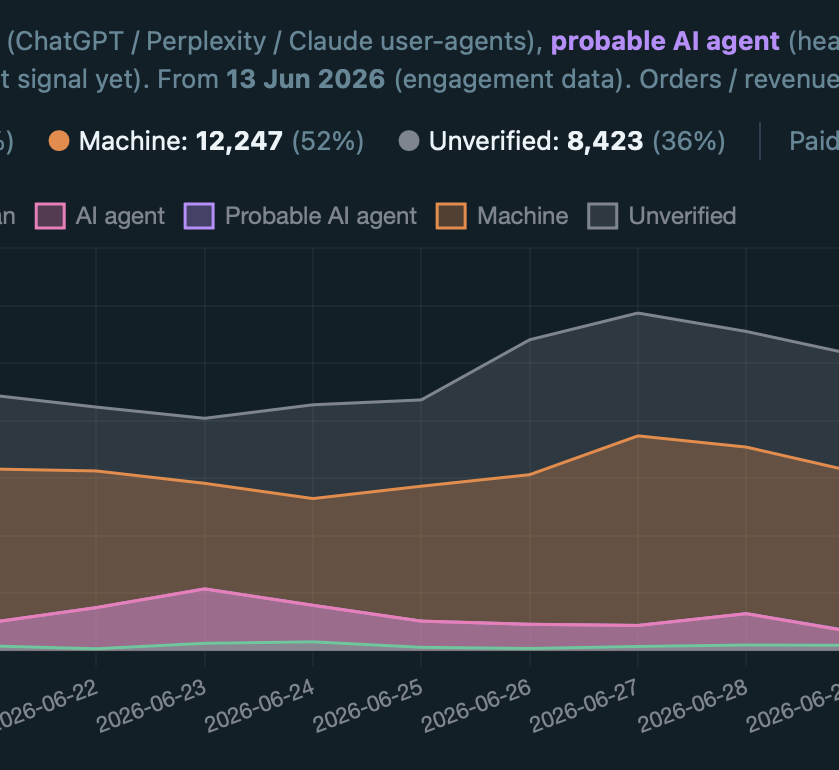
I once wrote about building my own privacy-friendly analytics tool. It had bot detection from the first version, yet it was not enough. Direct visits took a strangely high share of my traffic. When someone claims that 20% of their visits are bots and 80% are humans, I used to think the same. Today I would say the opposite ratio is closer to the truth. This is how I got there.
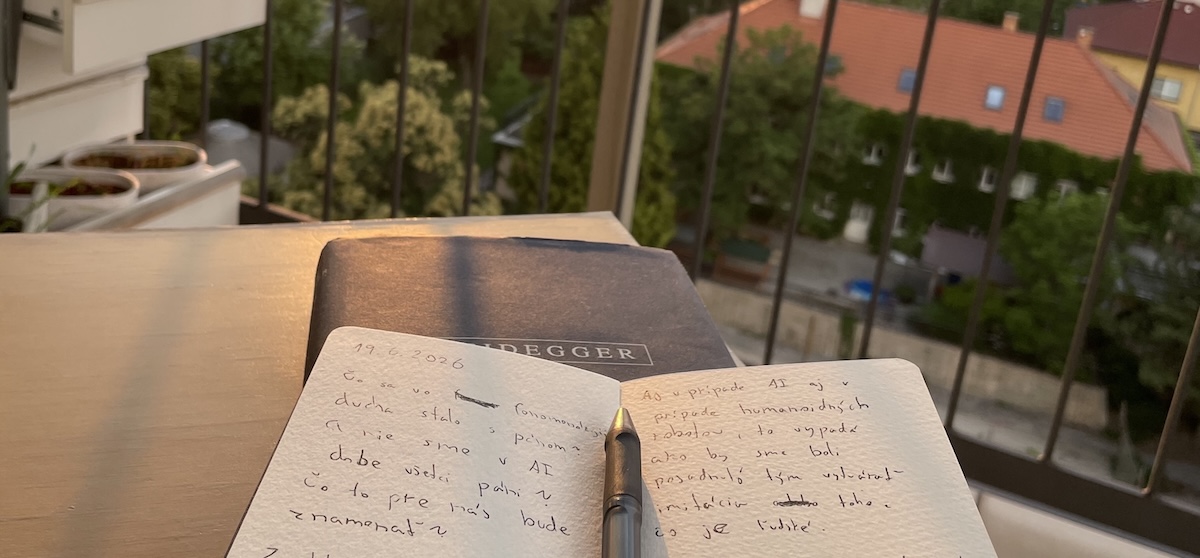
I have Heidegger and my notebook beside me. I am asking where all of this is heading, where artificial intelligence is taking us.
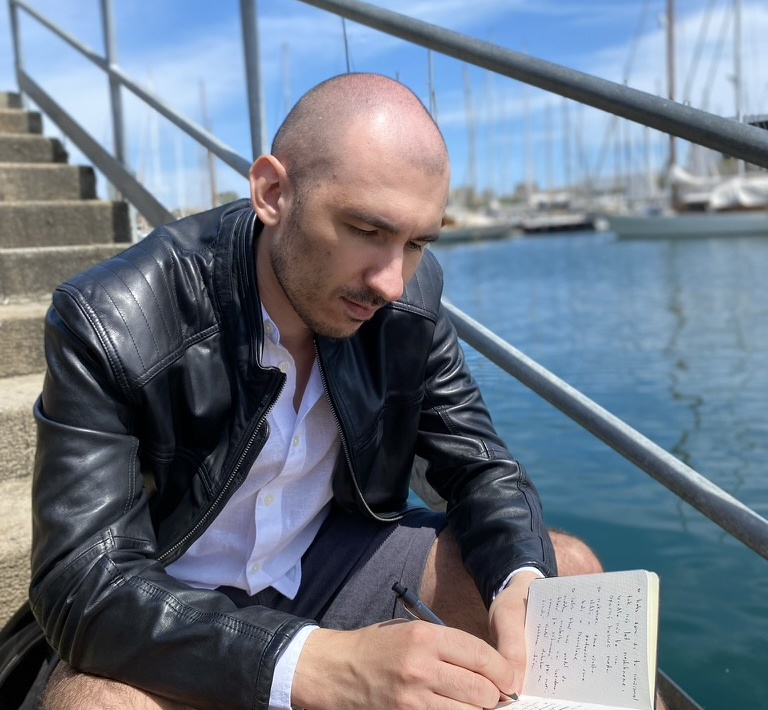
Four days in Catalonia. No computer, no AI, almost no social media. I bought this notebook so that I could write down what I would think about, and what I would come across and learn on the trip.